
The National Electricity Market
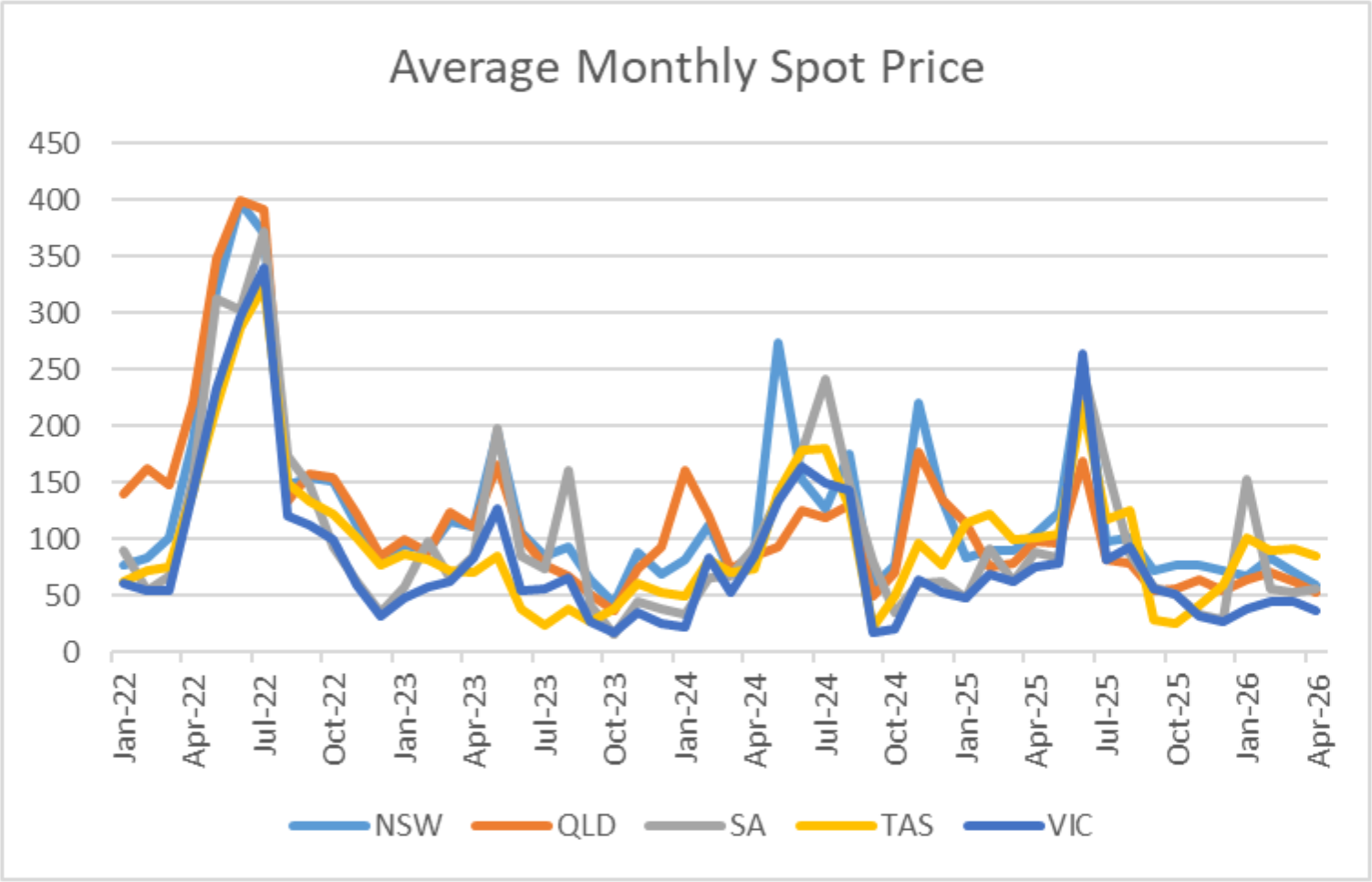
Wholesale electricity prices decreased in all NEM States in April apart from SA which increased by 6%. VIC fell the most, down 20% to $36 while NSW and QLD both fell 15% to $60 and $53 respectively. Average prices ranged from $36 in VIC up to $85 in TAS.
Electricity Generation Mix
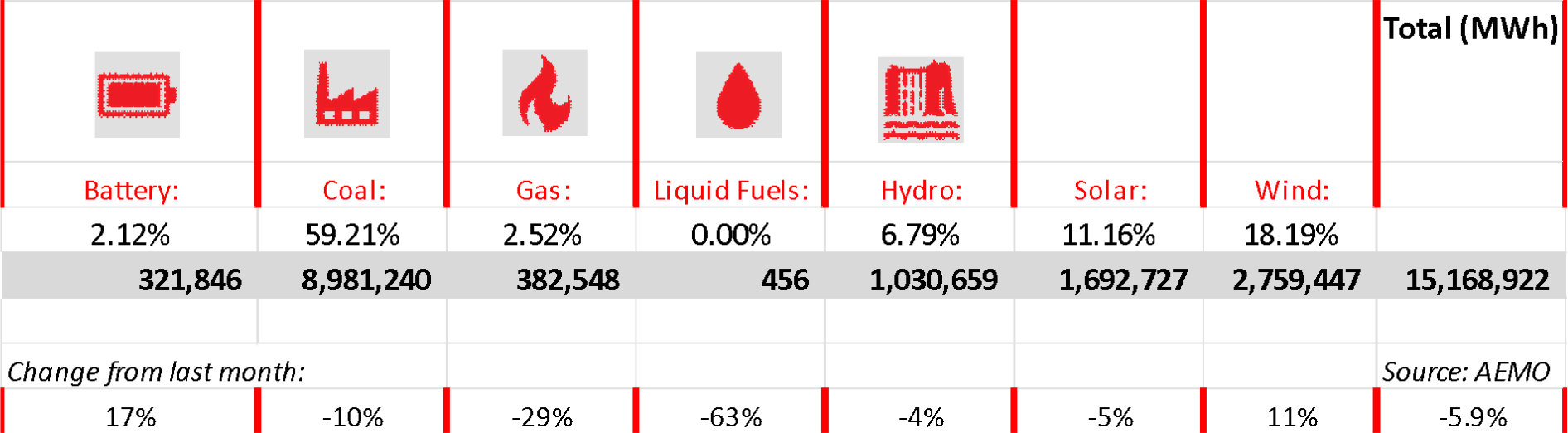
Total grid-scale generation for April decreased by 5.9% from March levels – factoring in the decreased days in April this confirms an expected reduction in operational demand as we move into the traditionally lower demand, shoulder season.
Coal and Gas generation both had significant falls while Wind generation had a notable increase compared to last month.
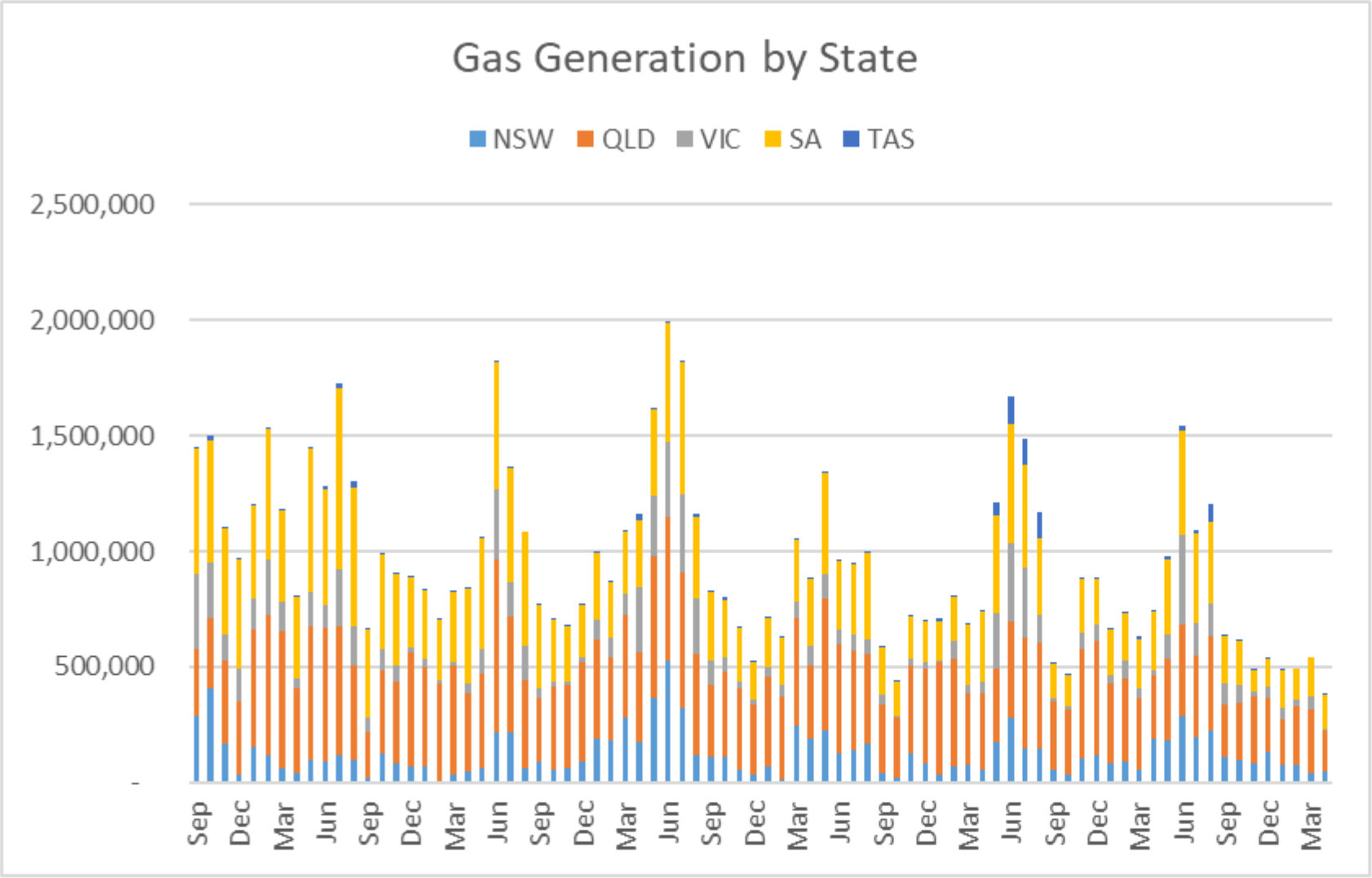
Gas Generation
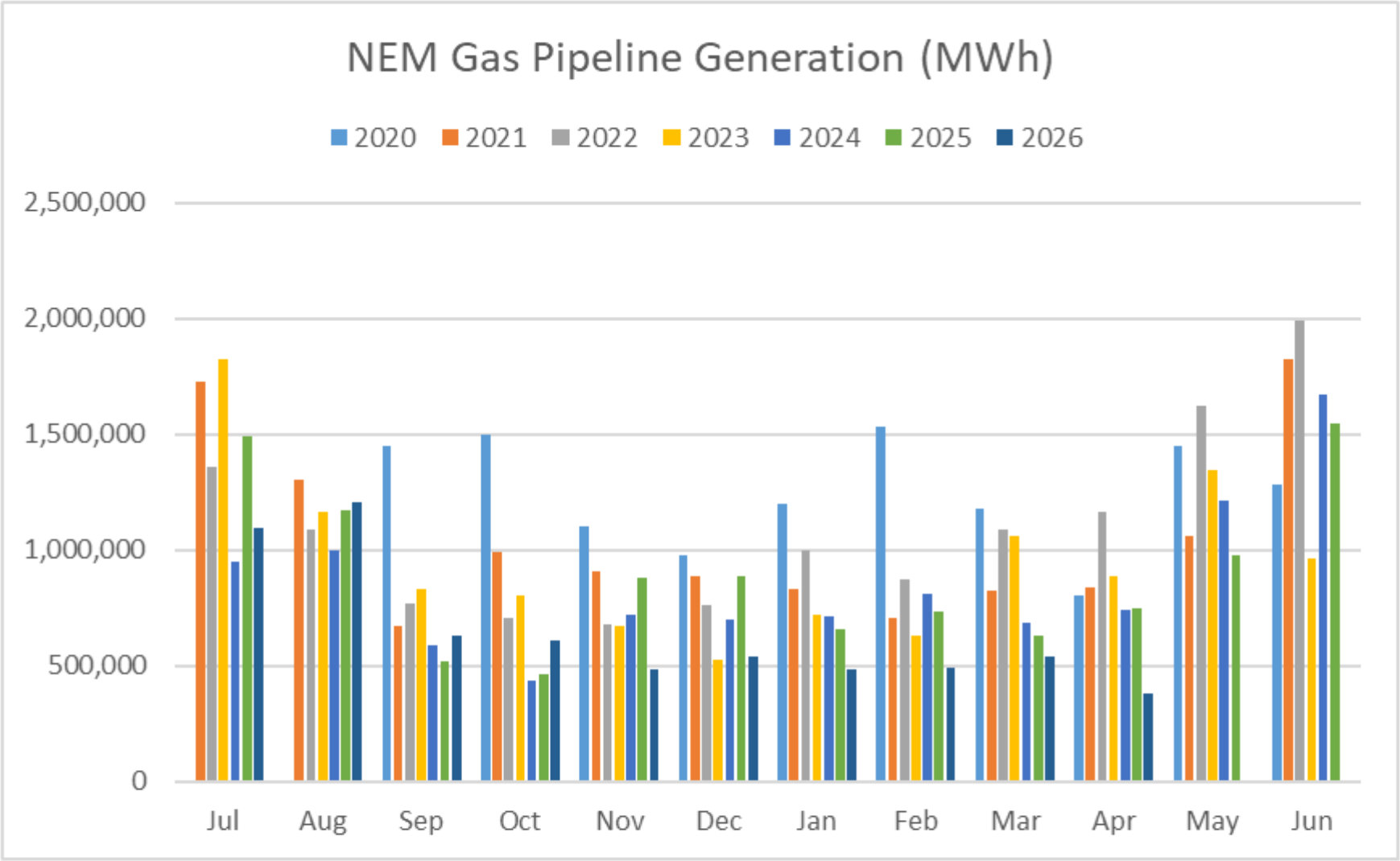
Gas generation decreased in April – down 29% compared to March. Compared to 12 months ago gas generation was 49% lower than it was in April 2025 – below the lowest level seen in any month in the last 7 years.
Gas generation was down in all States apart from NSW (up 23%) and TAS which used minimal levels. VIC was down 84% while QLD was down 38% and SA 11%.
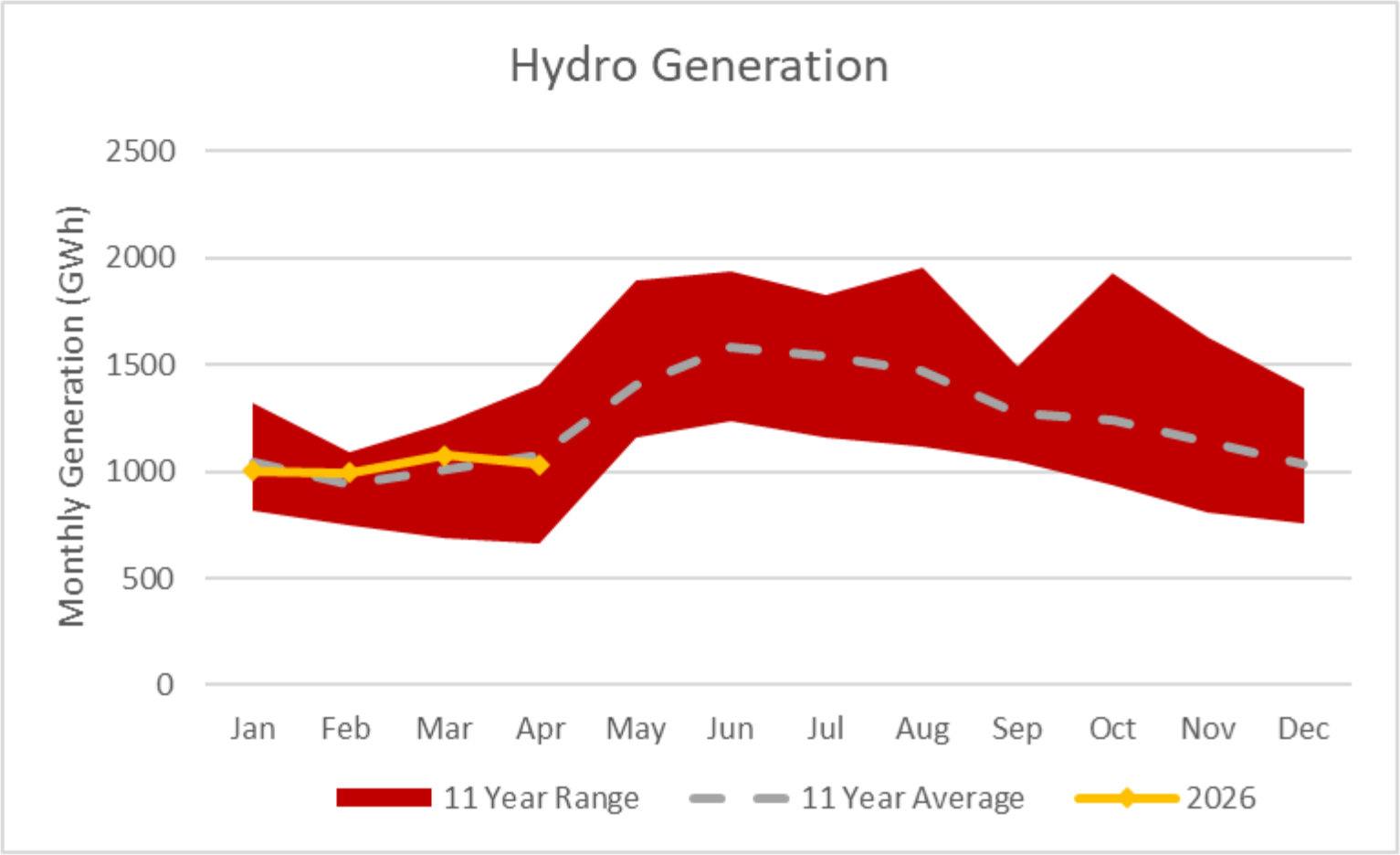
Hydro Generation
Hydro generation decreased 4% in April compared to March levels and was slightly below the average level seen in the last 11 years, for this time of year, as shown below.
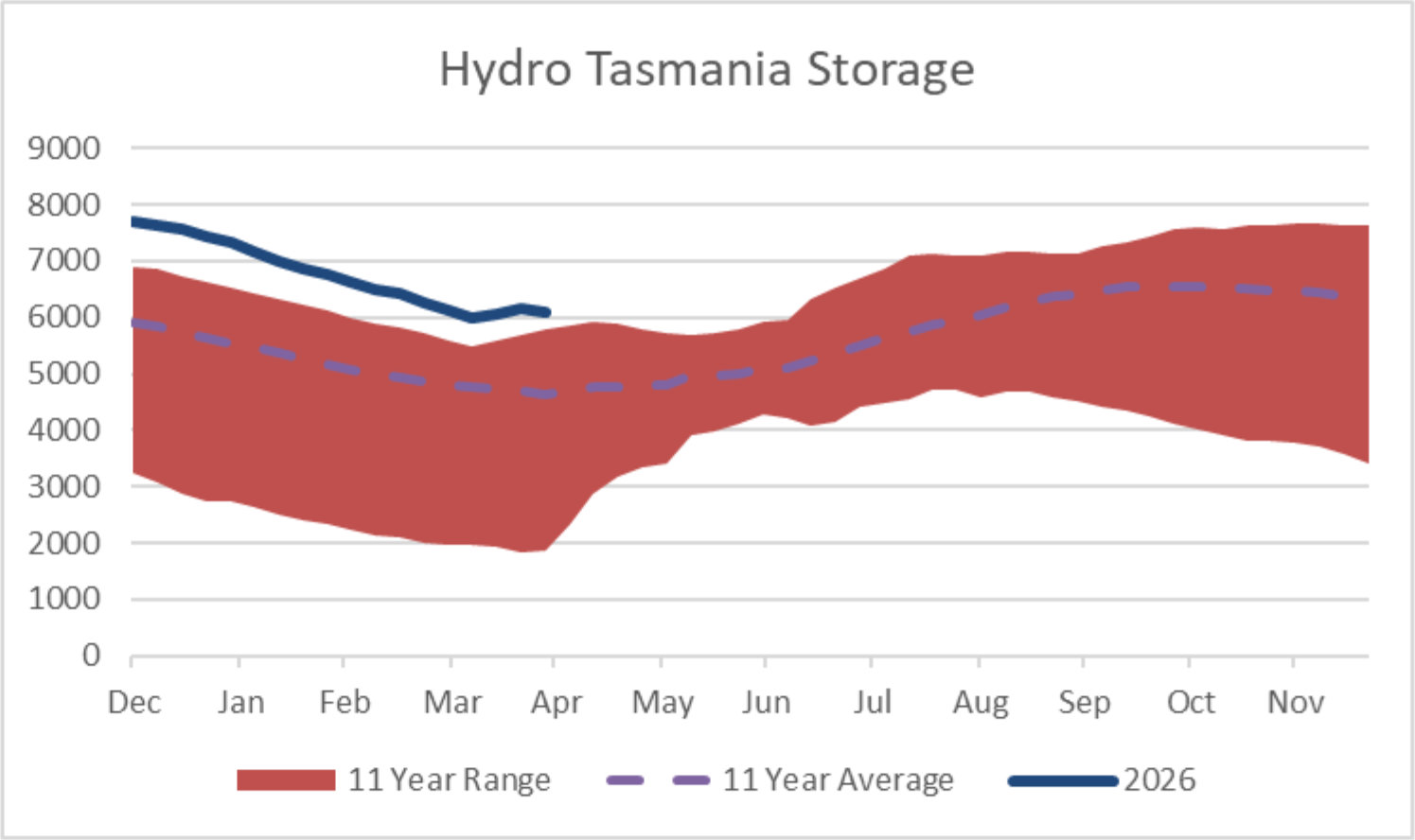
Storage in Hydro Tasmania’s lakes fell slightly through March. Storage ended the month at 6,103GWh (42% full), a decrease of 32GWh over the month. This is 17% more than the same time last year and above the maximum level seen at this time of year in the last 11 years, as shown in the following chart.
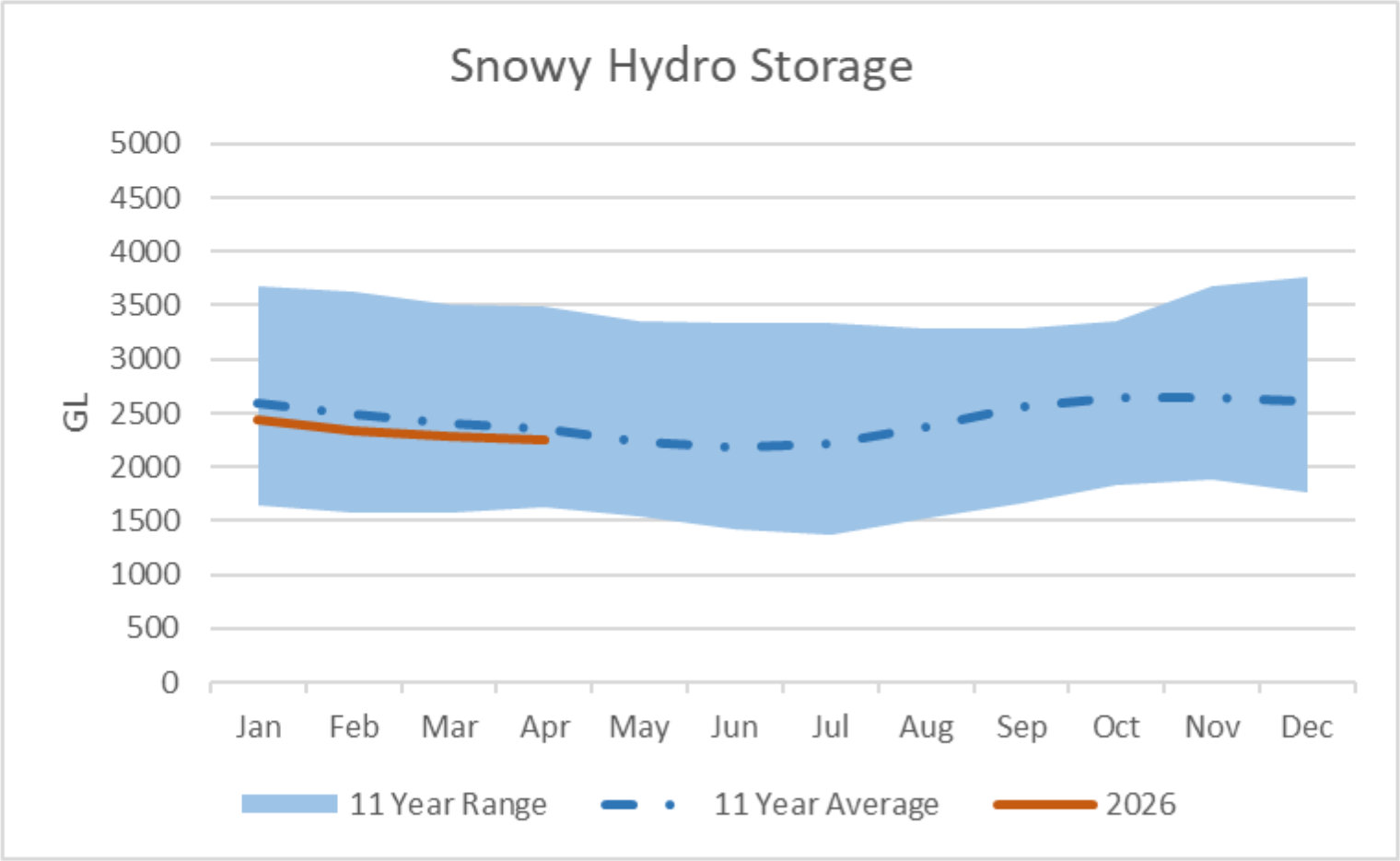
Snowy Hydro’s storage also decreased slightly through April. Snowy finished the month 43% of full (2,257Gl) – a 1% decrease over the month. Levels remain slightly below the 11-year average for this time of year as shown in the following chart.
Climate outlook overview (from BOM)
The long-range forecast for May to July shows:
- Rainfall is likely to be below average for much of eastern Australia and parts of the south.
- Daytime temperatures are likely to be above average for most of Australia.
- Overnight temperatures are likely to be above average for most of Australia.
New Renewable Generation (Excluding Hydro)
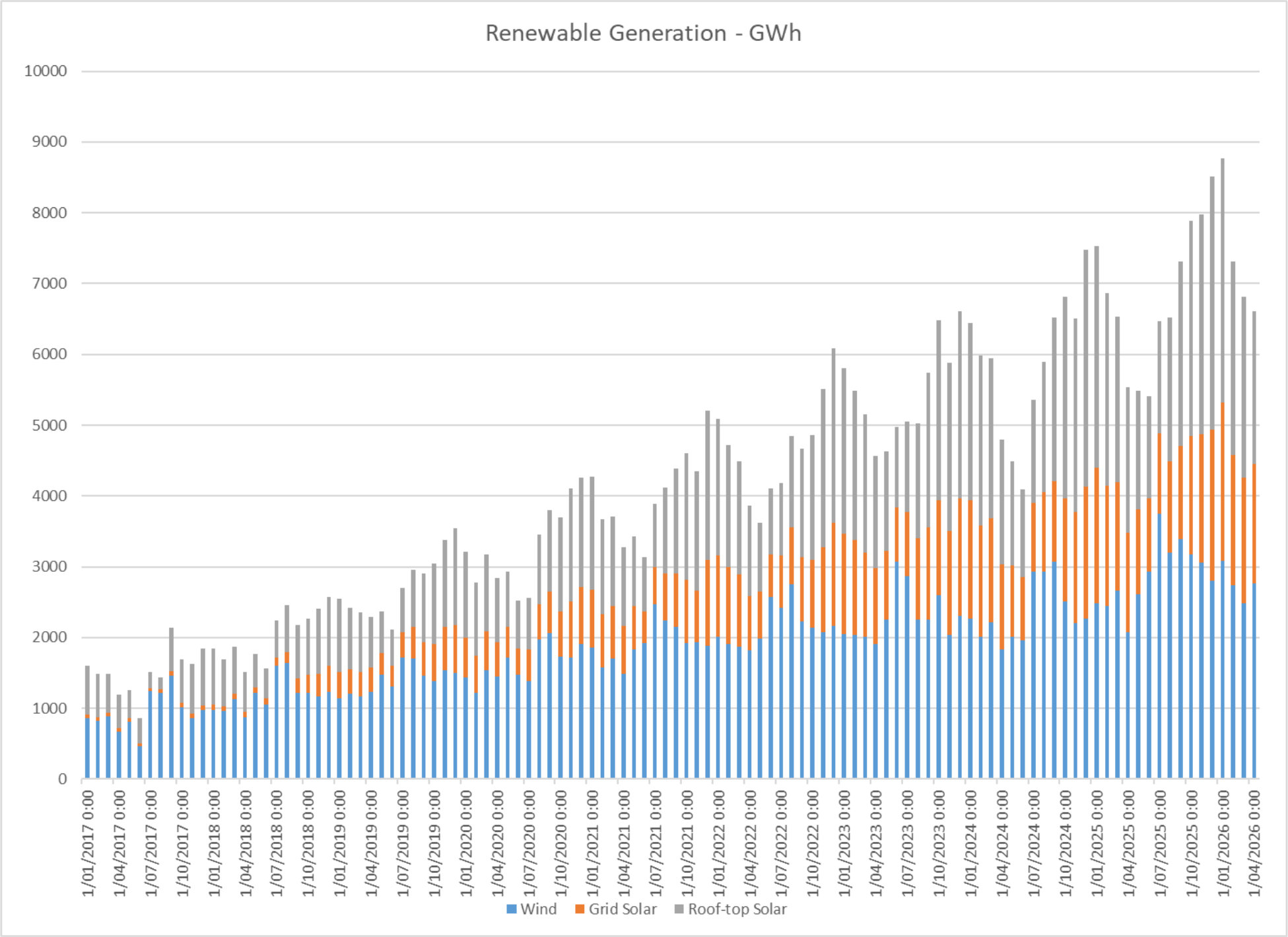
Total renewable generation (wind and solar, including roof-top solar) in April was 6,615GWh – a drop of 3% from last month’s level, but 20% above the same month last year. Wind generation was up 11% from last month’s level and 33% above April 2025. Utility Scale Solar generation was down 5% from March’s level but up 21% over the same month last year.
The following chart shows the monthly energy produced for each of these renewable types since 2017.
The Electricity Futures Market
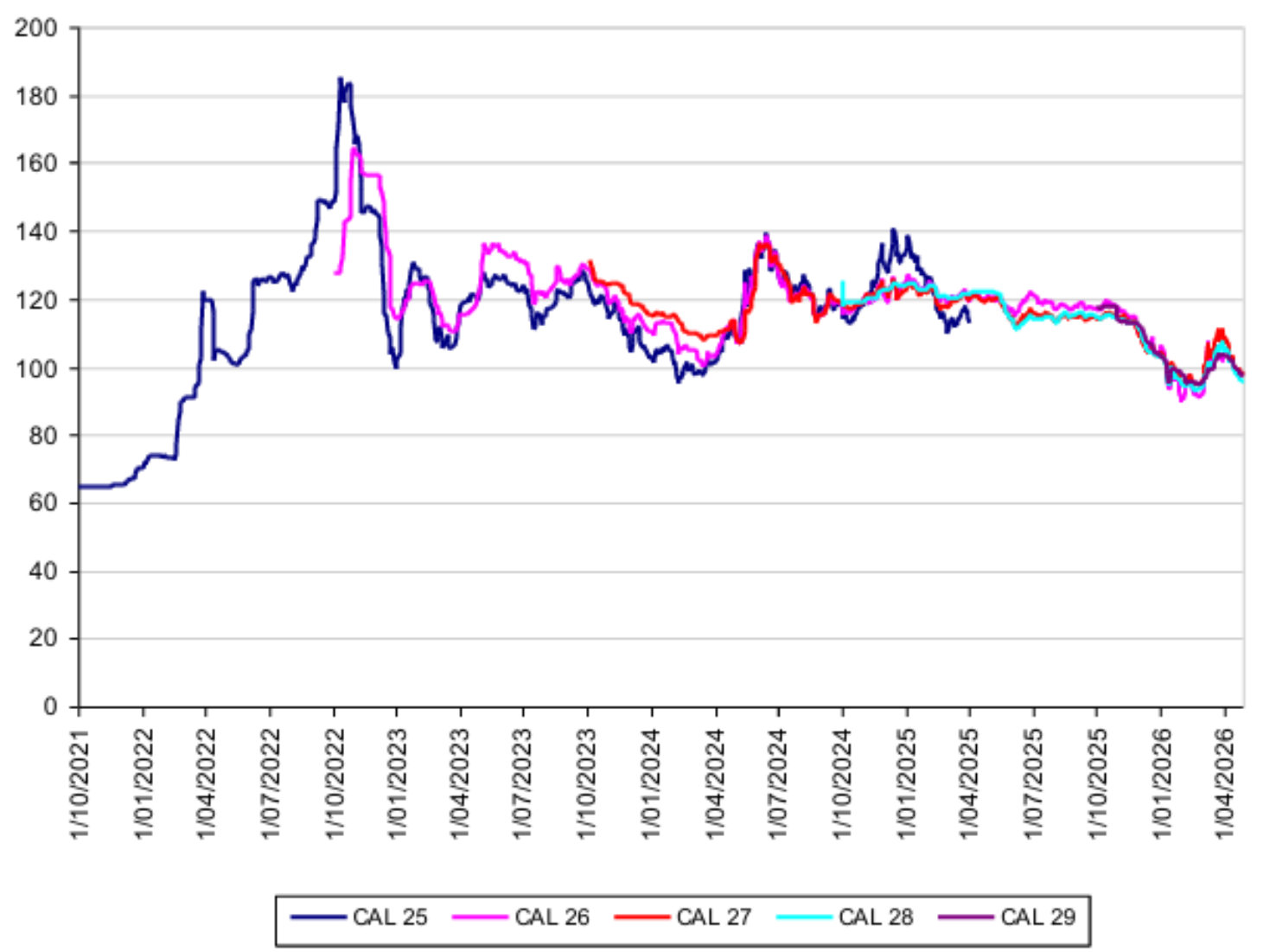
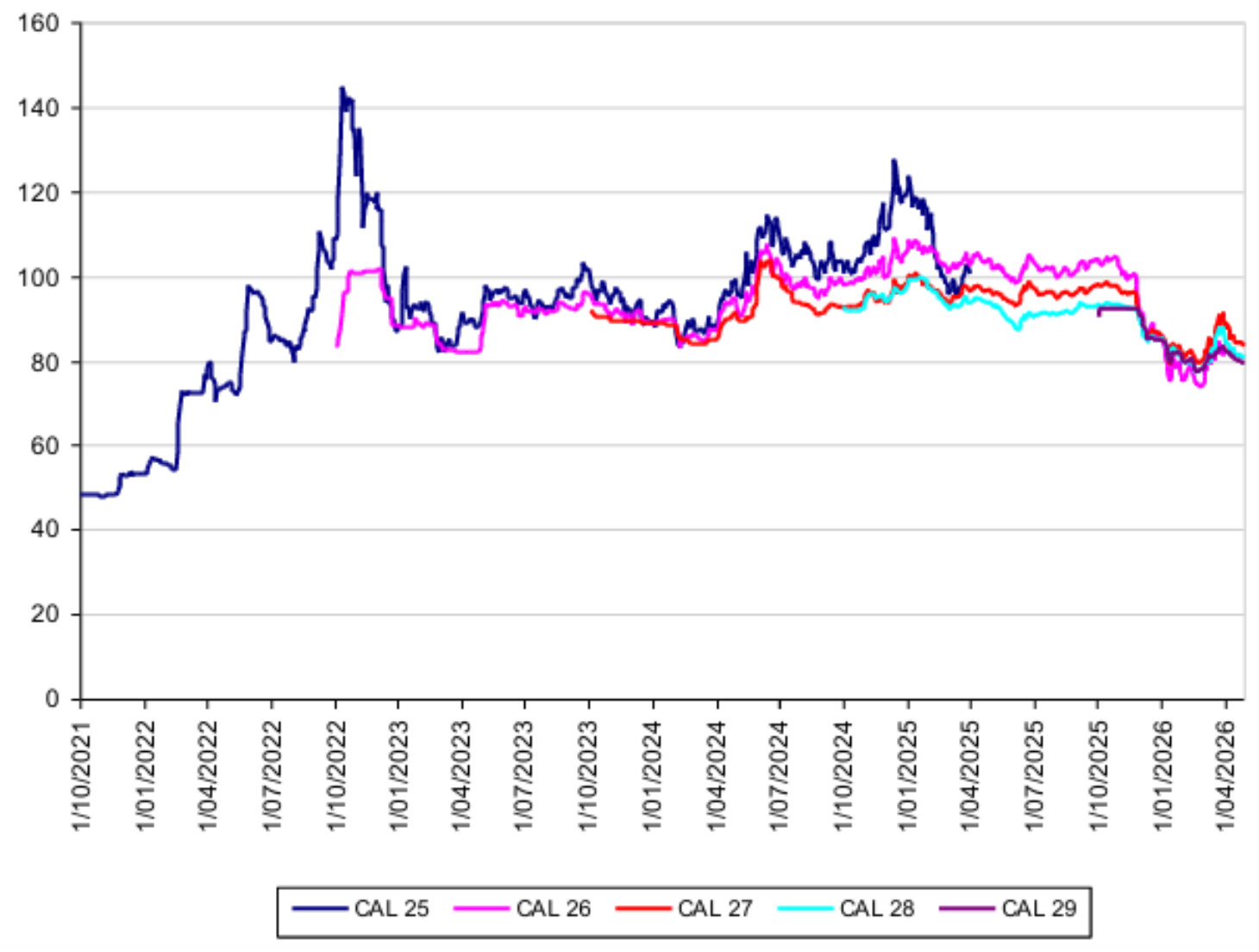
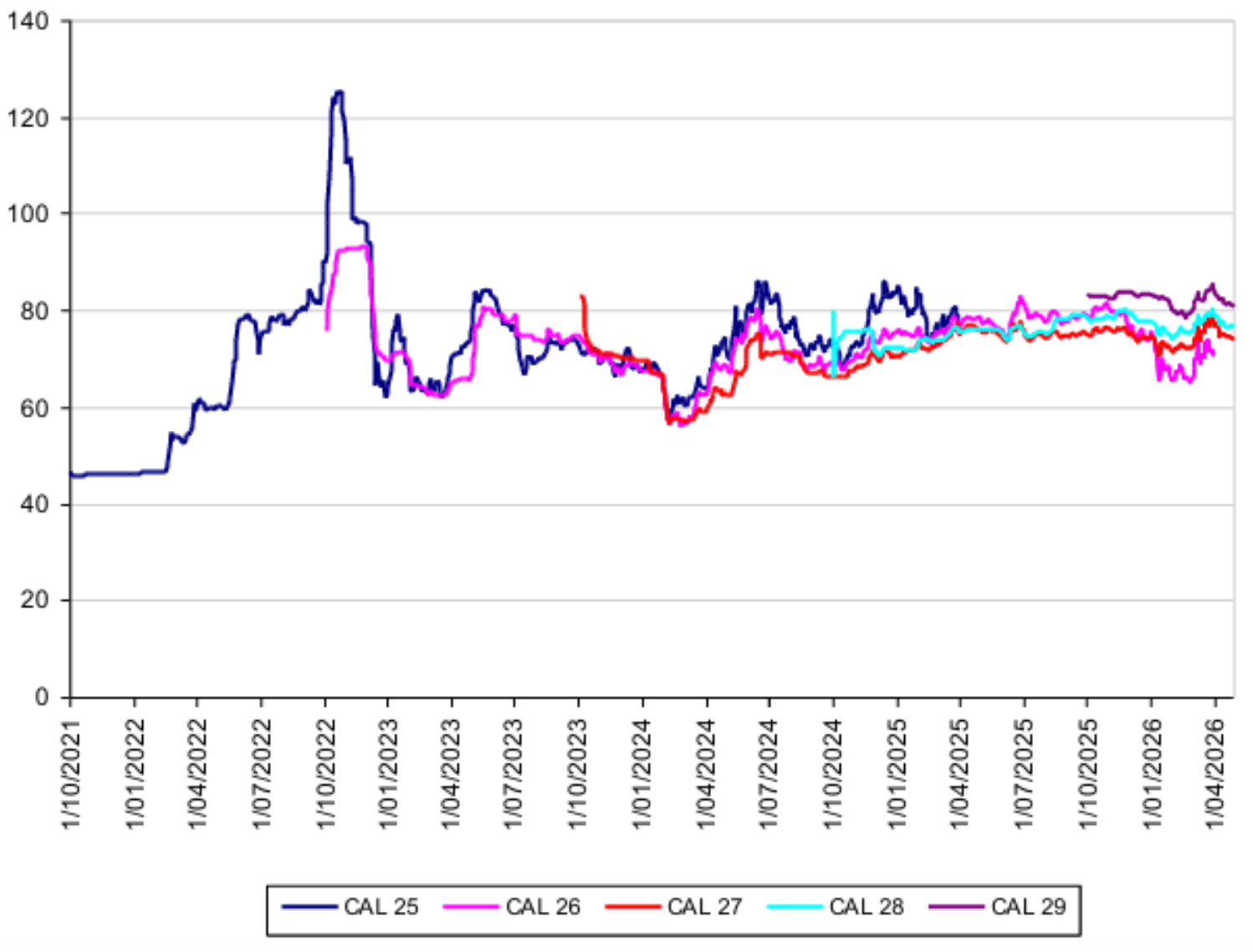
Futures prices decreased in all States through April, across every calendar year.
In NSW CAL27 was down 11% at $98. CAL28 was down 11% at $96, while CAL29 was down 6% ending the month at $98.
Calendar Year Contracts for New South Wales
QLD prices in CAL27 were down 7% at $84 while CAL28 was down 7% ($81). CAL29 ended the month also down 5% at $80.
Calendar Year Contracts for Queensland
VIC futures prices for CAL27 were down 5.5% at $74, while CAL28 was down 4% at $76. CAL29 ended the month down 5% at $81.
Calendar Year Contracts for Victoria
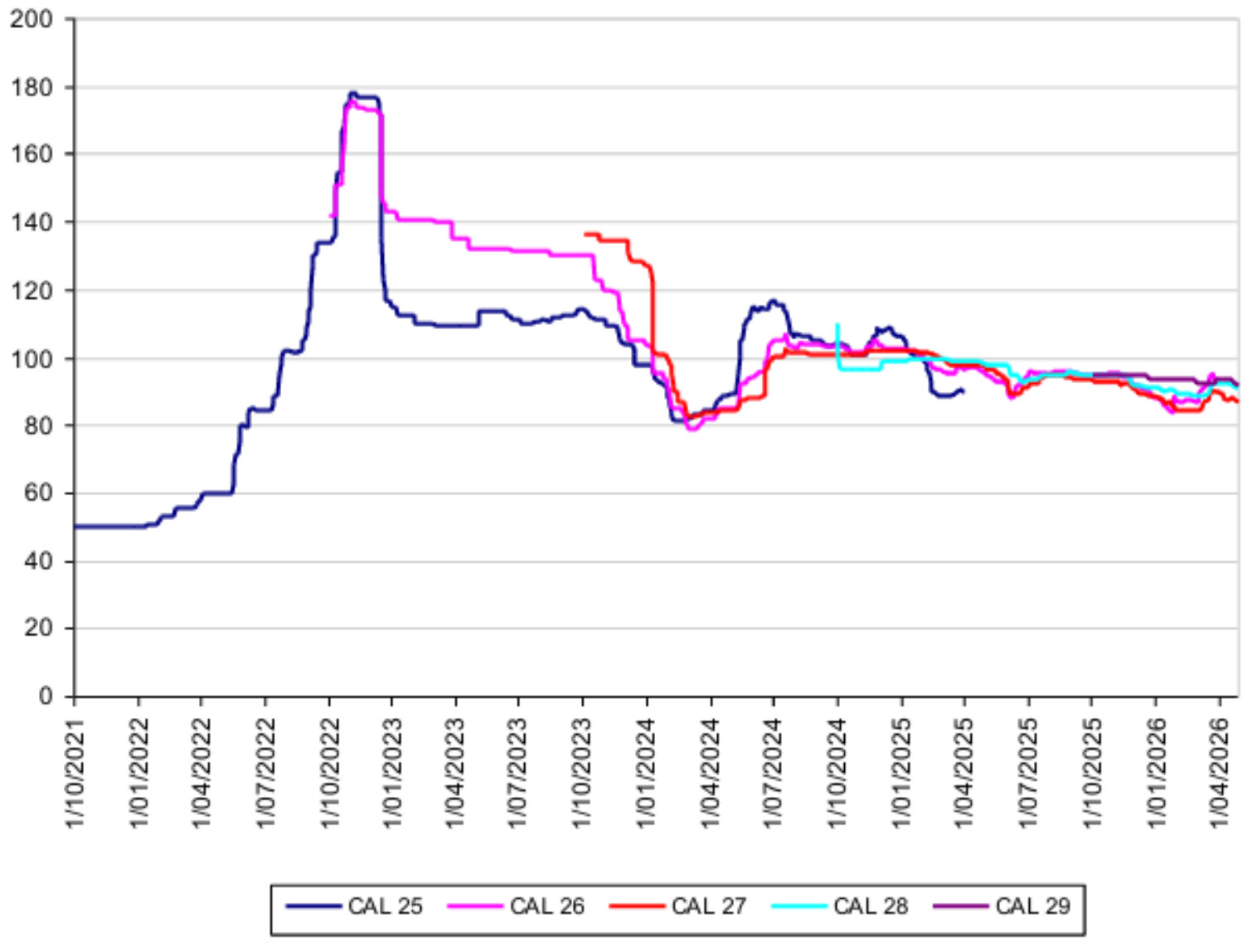
SA has less liquidity in the futures markets than other States, so changes tend to be lumpier and less a true reflection of the underlying market. For completeness we have included the graph below.
Calendar Year Contracts for South Australia
The Gas Market
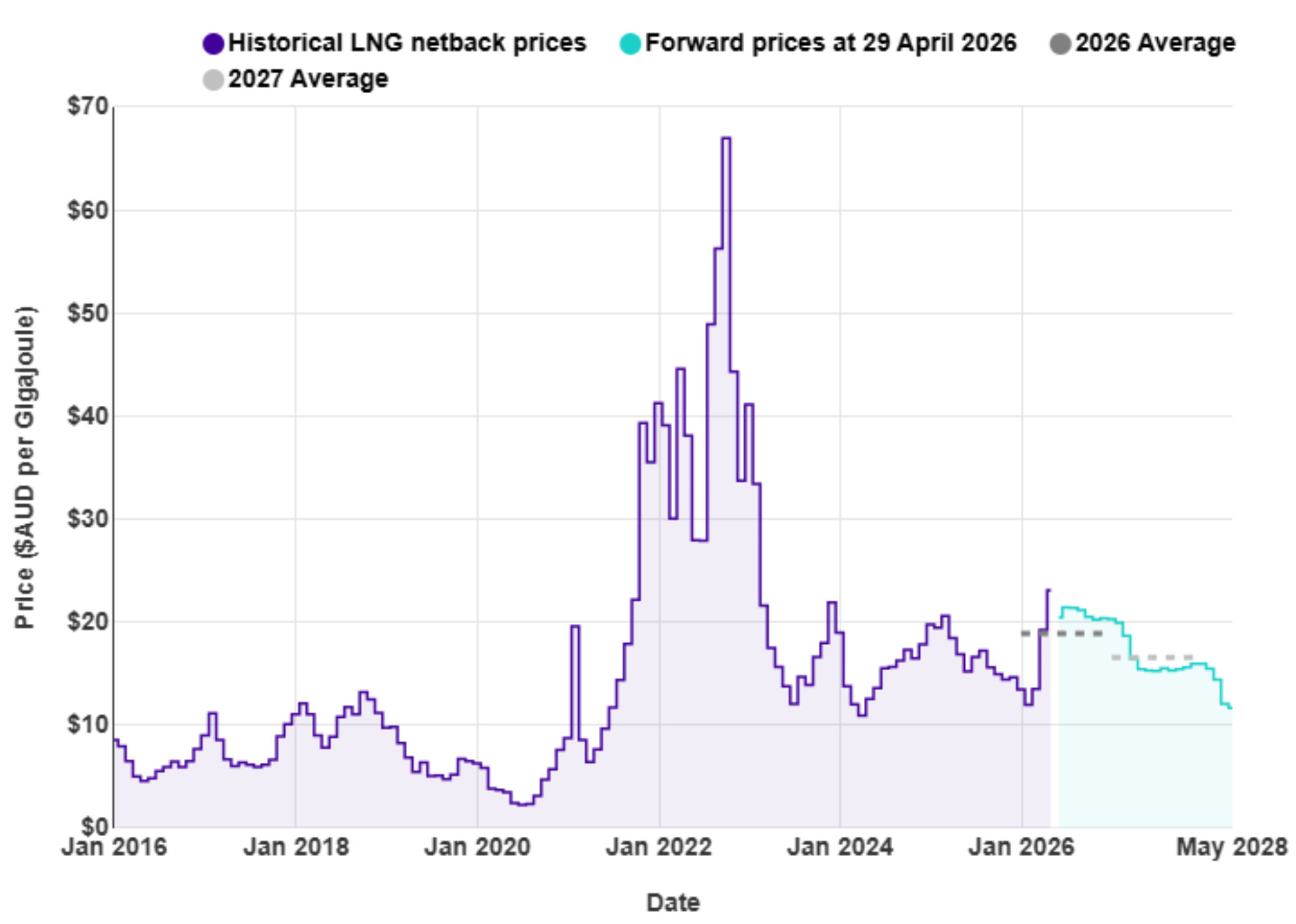
Internationally, LNG netback prices have increased on the conflict in the middle east. Prices in April jumped another 20% to $23.12/GJ. However forecast prices were down 10% at $18.92/GJ for 2026 and 14% at $16.6 for 2027. (Note that netback prices are indicative of international prices – they are produced by the ACCC and quoted in Australian dollars. They are net of the estimated costs to convert from pipeline gas in Australia to LNG, hence the term “netback”)
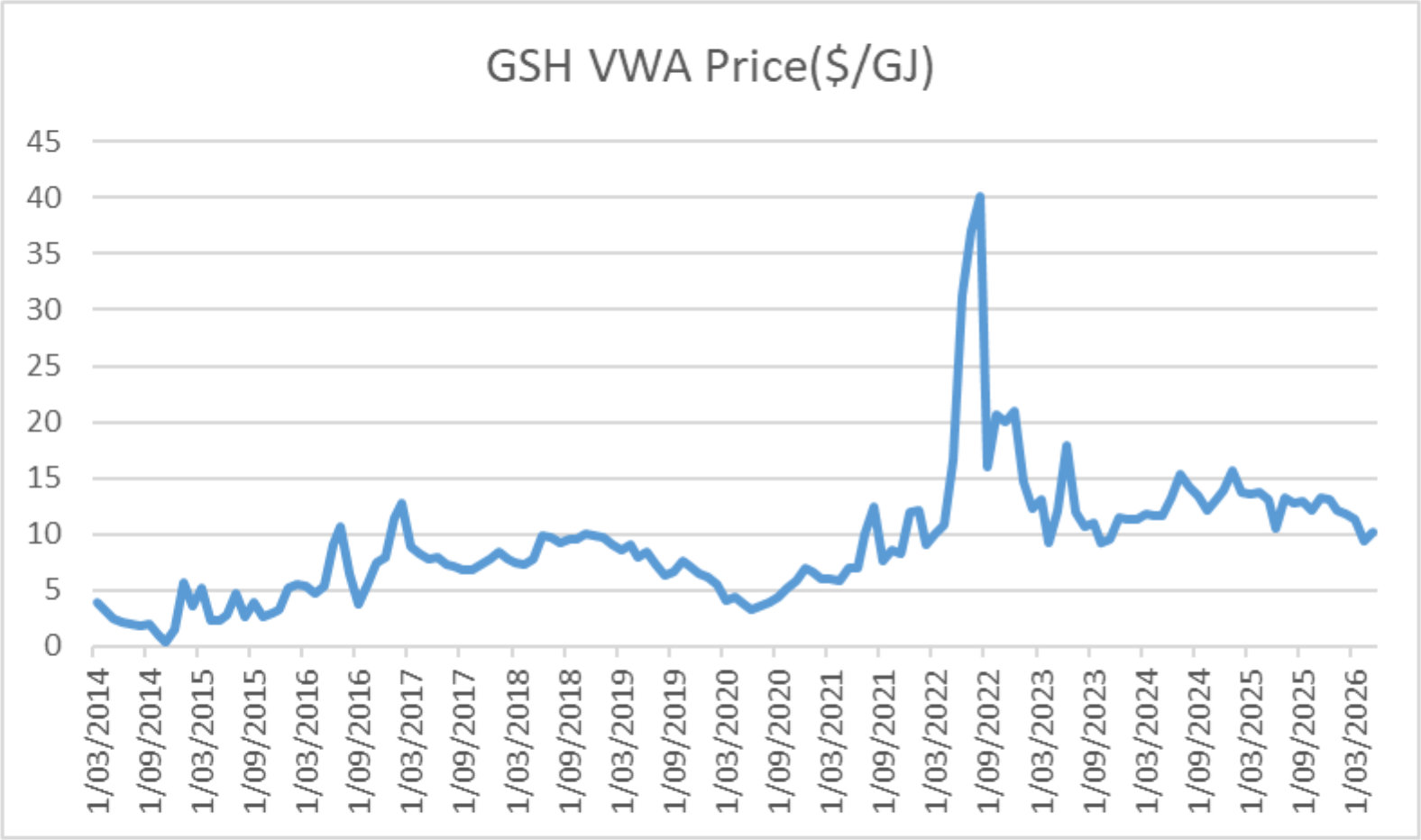
Domestic spot gas prices increased in April. The following graph shows the 30-day rolling average price at Wallumbilla gas supply hub – ending the month at $10.3/GJ, up 10% from March levels. This remains well below the LNG netback price. Prices are 21% below what they were the same time last year.
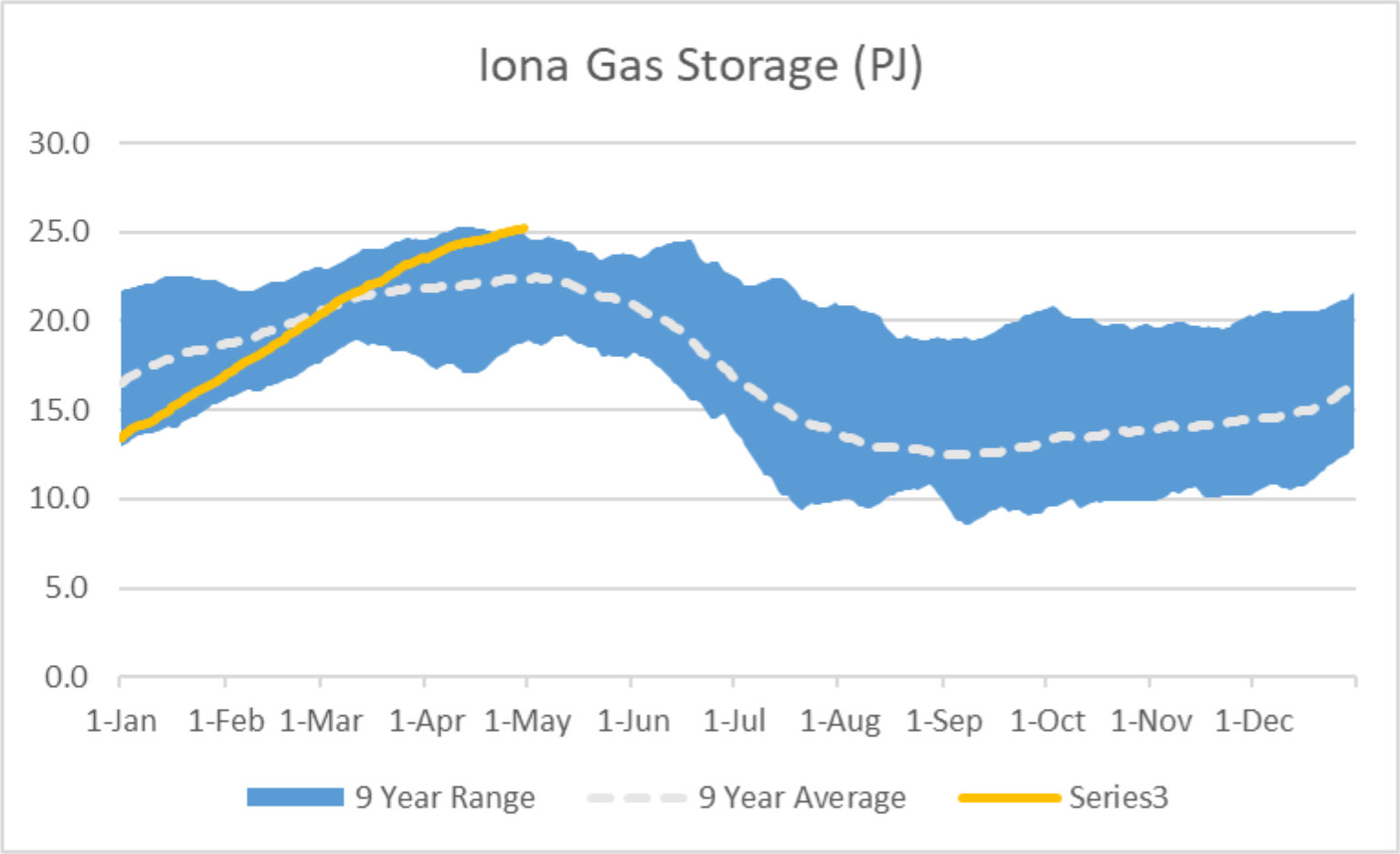
Gas storage at the key Iona storage facility increased through April. Storage increased to 25.2PJ – a 7% rise over the month. Storage is now above the maximum levels we have seen at this time of year for the past 9 years.
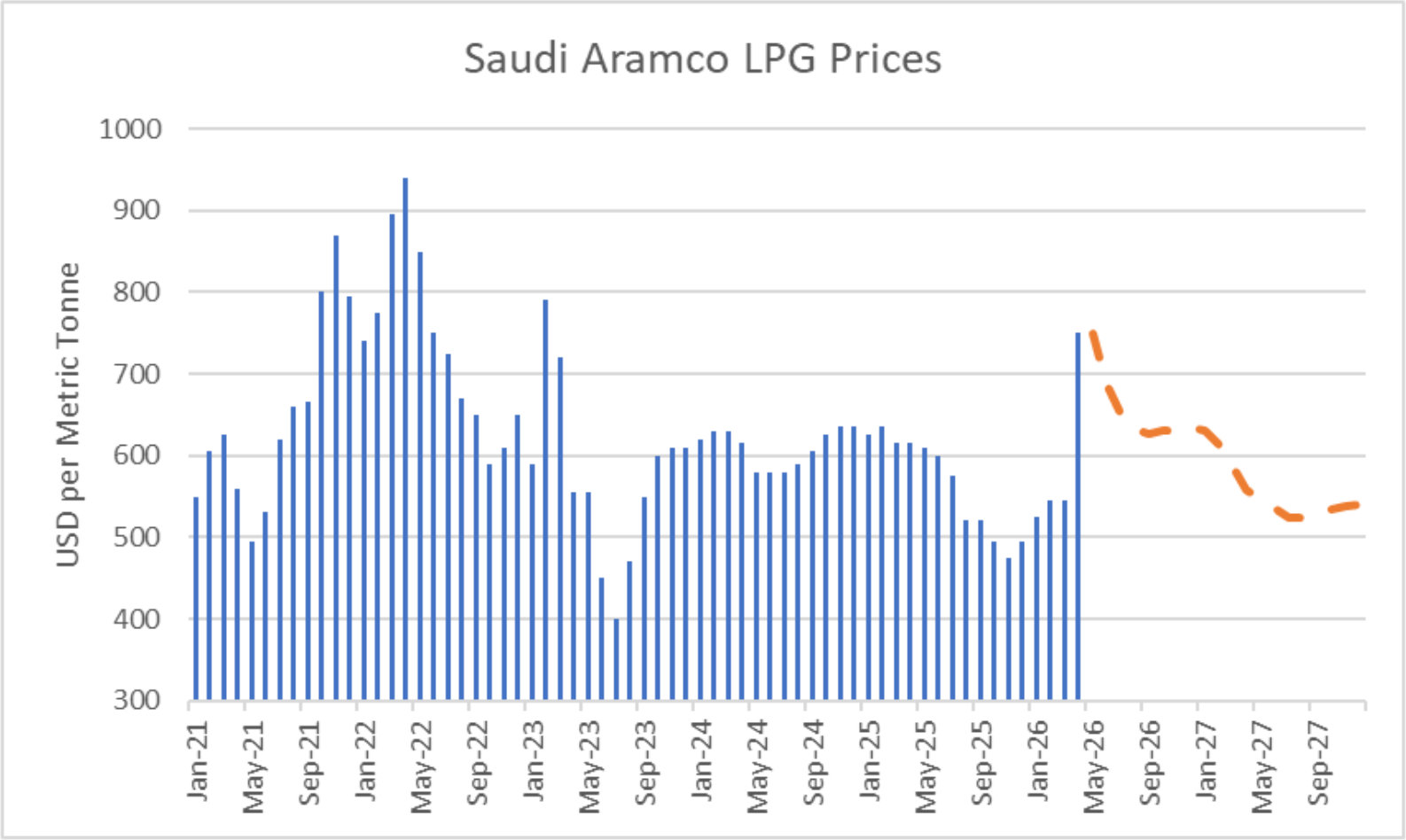
LPG is an important fuel for many large energy users, particularly in areas where reticulated natural gas is not available. The contract price of LPG is typically set by international benchmarks such as the Saudi Aramco LPG price – normally quoted in US$ per metric tonne.
The following graph shows the Saudi Aramco LPG pricing for the last 5 years as well as forecast pricing for the year and a half ahead. The war in the middle east has resulted in a large increase in pricing over the past month.
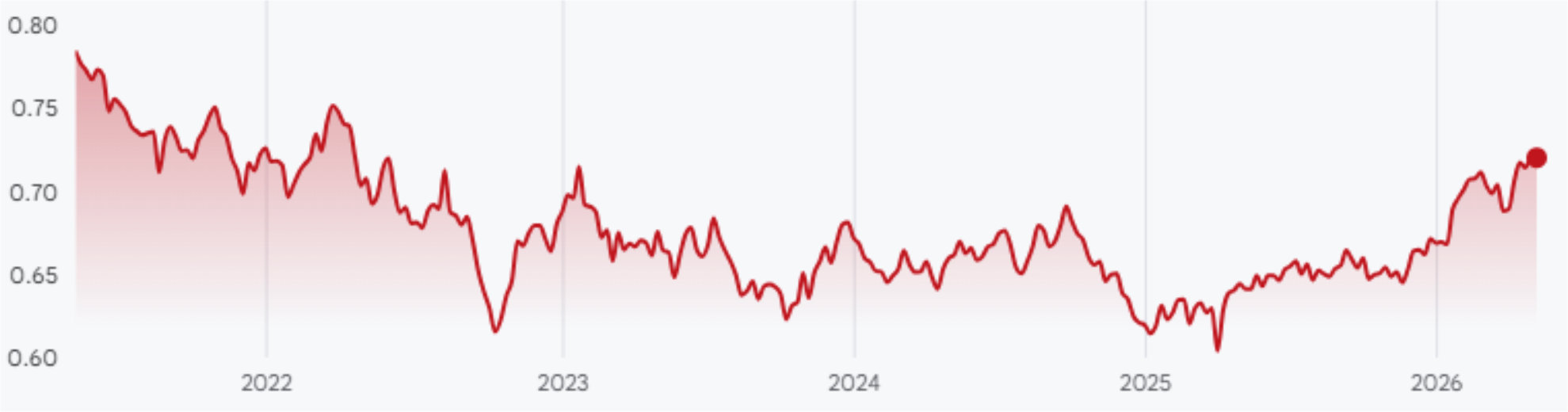
The other main contributing factor to LPG prices in Australia is the exchange rate against the USD. The exchange rate increased through the month closing at 0.72. This remains higher than we have seen in recent years and would tend to push down LPG prices when quoted in AUD.
The Coal Market
The conflict in the middle east has resulted in coal prices increasing along with other international energy commodities. To date the impact has not been as great as that observed during the initial years of the Ukraine war. Prices in April dropped slightly, ending the month at $134/tonne – down 4% as shown in the following graph of prices over the last 10 years.
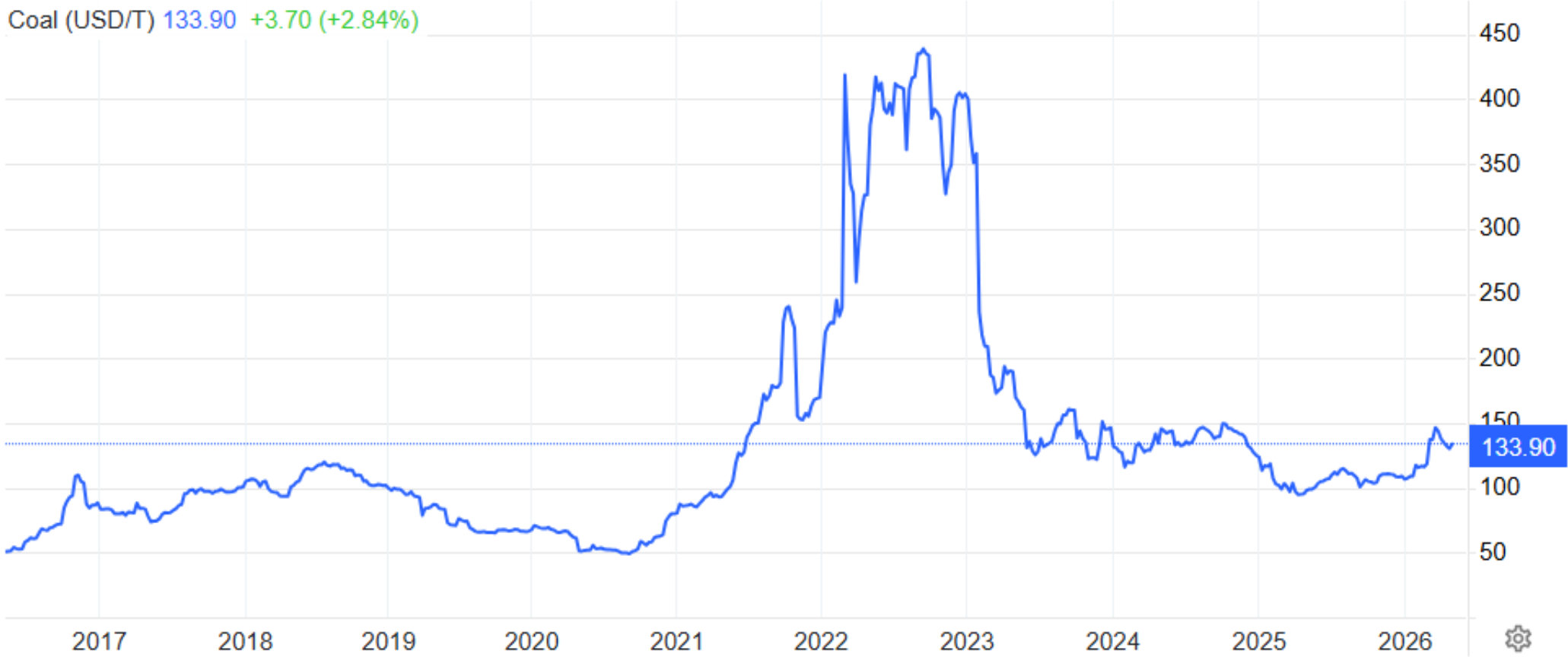
International coal prices continue to be an important driver of electricity prices especially in the States most reliant on black coal generation – ie QLD and NSW.
Environmental Certificates
The following graph shows environmental certificate spot prices over the last 6 years.
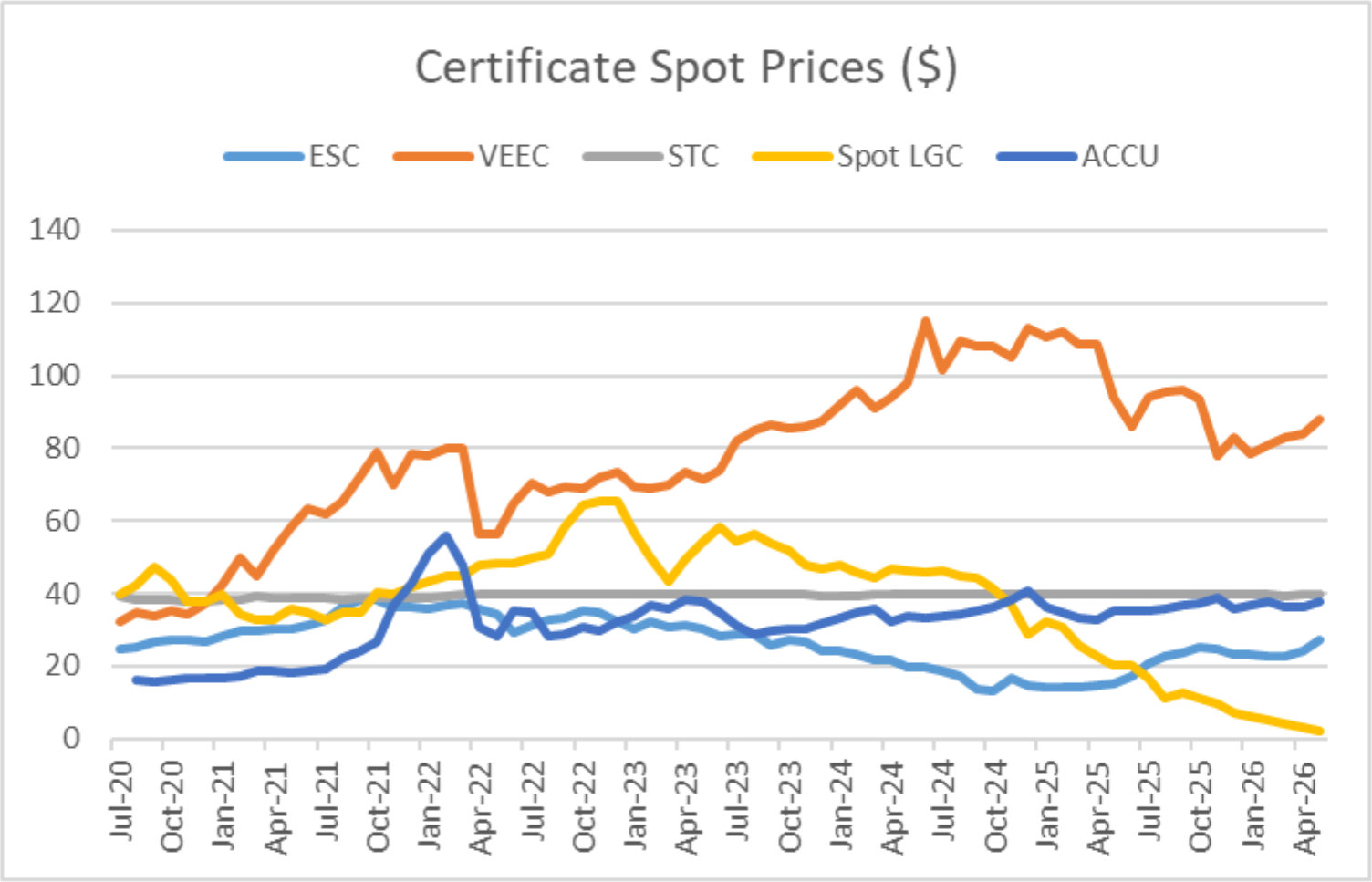
VEEC prices increased again in April – up 5% to $88. Spot LGCs continued recent falls – down a further 31% to $2. ESCs increased 14% to $27.25 while STCs were unchanged at $39.6. ACCUs increased 4% to $37.8.
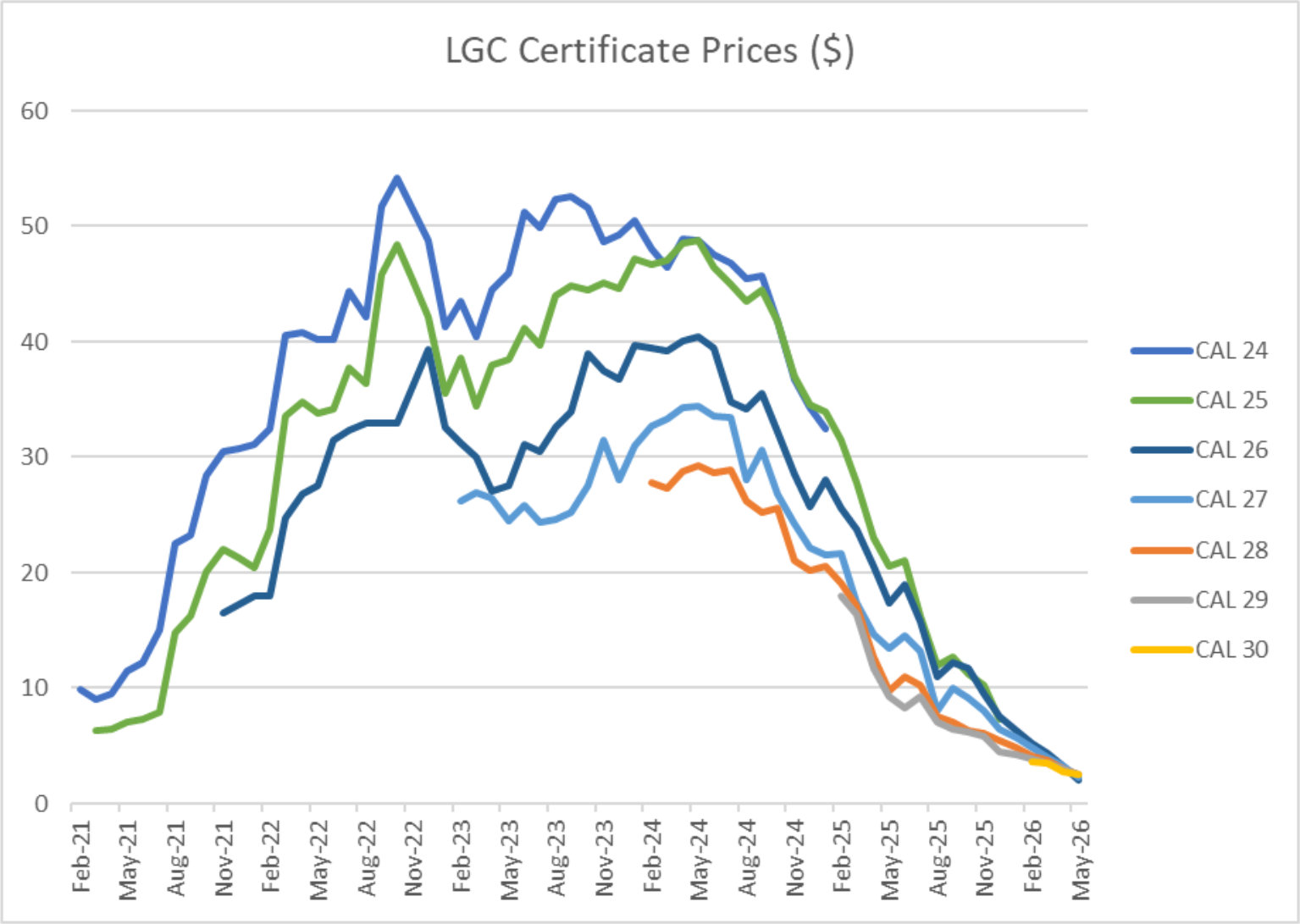
Future dated LGC prices decreased again in all years. CAL26 fell to $2 while CAL27 decreased to $2.25. CAL28 , CAL29 and CAL30 all decreased to $2.5.
About this Report
This energy market summary report provides information on wholesale price trends for all regions within the National Electricity Market (NEM) and environmental scheme certificates.
Please note that all electricity prices are presented as a $ per MWh price and all certificate prices as a $ per certificate price.
All NEM spot prices are published by the Australian Energy Market Operator (AEMO). Futures contract prices are sourced from ASX.
Further information can be found at the locations noted below.
- NEM Spot market – AEMO publishes a range of detailed information which can be found here: https://aemo.com.au/Electricity/National-Electricity-Market-NEM/Data-dashboard
- Weather and Climate data – The Bureau of Meteorology publishes a range of weather related information which can be found here: http://www.bom.gov.au/climate/
Disclaimer
This document has been prepared for information and explanatory purposes only and is not intended to be relied upon by any person. This document does not form part of any existing or future contract or agreement between us. We make no representation, assurance or guarantee as to the accuracy of information provided. To the maximum extent permitted by law, none of Smart Power Utilities Ltd, its related companies, directors, employees or agents accepts any liability for any loss arising from the use of this document or its contents or otherwise arising out or, or in connection with it. You must not provide this document or any information contained in it to any third party without our prior consent.
© Copyright, 2026. Smart Power Utilities Ltd ABN 72 121 464 864


